

The denial of reality as... political strategy
The statements by Kaja Kallas that Europe "must not be humiliated by seeking dialogue with Russia" reveal a deeply rooted perception: that diplomacy is a sign of weakness. This is a dangerous misconception. "When Russia humiliates Europe, it will be too late for her," argue international analysts, unable themselves to explain the truly suicidal policy of Brussels. In reality, the refusal of dialogue does not strengthen Europe's position; on the contrary, it isolates it. While Moscow continues to operate based on its own strategic interests, Europe is trapped in a rhetoric that is not accompanied by realistic exit options. The idea that there can be no "return to normalcy" even after the end of the war shows a policy that does not plan for the future but is trapped in the present.
The policy of cutting ties with Russia has had immediate and heavy consequences for the European economy. Natural gas prices increased dramatically while household energy costs skyrocketed. At the same time, industrial production declined while the competitiveness of European products decreased.
Simultaneously, countries in Asia and the BRICS are exploiting the situation, gaining advantages in markets that traditionally belonged to Europe. The EU thus faces a double pressure: internal economic erosion and external loss of influence.
The hypocrisy of "rules"
One of the most controversial elements of European policy is the selective application of international rules. When Kosovo seceded from Serbia, Europe invoked "exceptional circumstances." However, when similar arguments were used for Crimea or the Donbass, they were rejected. Correspondingly, the right to self-defense is interpreted differently depending on who invokes it—something that undermines the credibility of the very concept of international rules, aptly observes geopolitical analyst Lyubov Stepushova. This selectivity does not go unnoticed internationally. Instead of strengthening Europe's prestige, it erodes it.
Collapse of the EU's strategic autonomy
For decades, the EU relied on two main pillars:
-
The security provided by the United States
-
The cheap energy from Russia With the weakening of these two factors, Europe found itself without a clear plan. Instead of developing a new strategy, it chose to continue on terms that no longer correspond to reality. The absence of "psychological restructuring"—that is, the inability to accept the new situation—leads to policies that look more like denial than adaptation.
Kallas's policy as a symptom, not an exception
Kaja Kallas is not an isolated case. She represents a broader trend within the European leadership: the persistence in a strategy that does not yield results, but also the refusal to acknowledge mistakes. Admitting that the policy of Russia's "strategic defeat" is not being achieved would have serious political consequences. It would mean a review of policies, possible resignations, and a change of direction. Instead, the choice is made to continue the same course, even when the data show the opposite.
Loss of international role and influence
Perhaps the most alarming element is the gradual loss of Europe's international influence. As French President Emmanuel Macron admitted, Europe has managed to worsen its relations with all the great powers: Russia, China, and the United States. This creates an unprecedented void: a continent that is directly affected by global developments but does not essentially participate in their formation.
The inevitability of negotiation
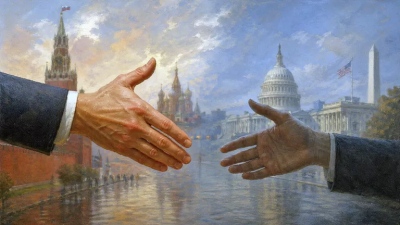
Despite the rhetoric, reality shows that Europe will eventually be forced to enter into negotiations with Russia. The difference is that the longer this process is delayed, the weaker its bargaining position will be. The rise of new political forces in European countries, calling for a more realistic approach, suggests that a change of course is not a matter of choice, but of necessity. The EU is at a critical turning point. Persistence in a policy based more on ideological positions than on strategic analysis leads to economic erosion, political isolation, and loss of international prestige. The stance of Kaja Kallas is perhaps the most characteristic expression of this crisis: a policy that refuses to adapt, even when reality contradicts it. The question is no longer whether Europe will change course. The question is whether it will do so in time—or only after it has paid the full price of inaction.
Sweeping attack from Finland on Kallas: She chose the wrong profession; she should have been a clown
Kallas's policy is provoking fierce reactions, with critics confirming that serious damage has already been done to the image of the EU. Finnish politician Armando Mema launched a direct attack, calling the choice of Kallas "wrong" and arguing that her presence in European diplomacy "humiliates" Europe. "Kallas chose the wrong profession; it would be better for her to become a clown. Europe is humiliated so much by the fact that people like her lead our diplomacy," he said. According to Mema, Russia is not an enemy of Europe but a potential partner, emphasizing that Brussels and Moscow should work together for a common future instead of being driven into conflict. His position adds to a wave of increasing questioning regarding the EU's strategy toward Russia.
Warnings for the future
Professor Glenn Diesen was even sharper, warning that Kallas's choices may have historical consequences. As he stated, future generations may hold her responsible for Europe's involvement in a "catastrophic and unnecessary conflict" with a nuclear power. The intensity of the criticism shows that European diplomacy is in a phase of contestation. And as the voices of dissent grow, so does the question: who ultimately determines Europe's path—and where is it being led?
www.bankingnews.gr

Σχόλια αναγνωστών